
Camp Lejeune: Past Water Contamination
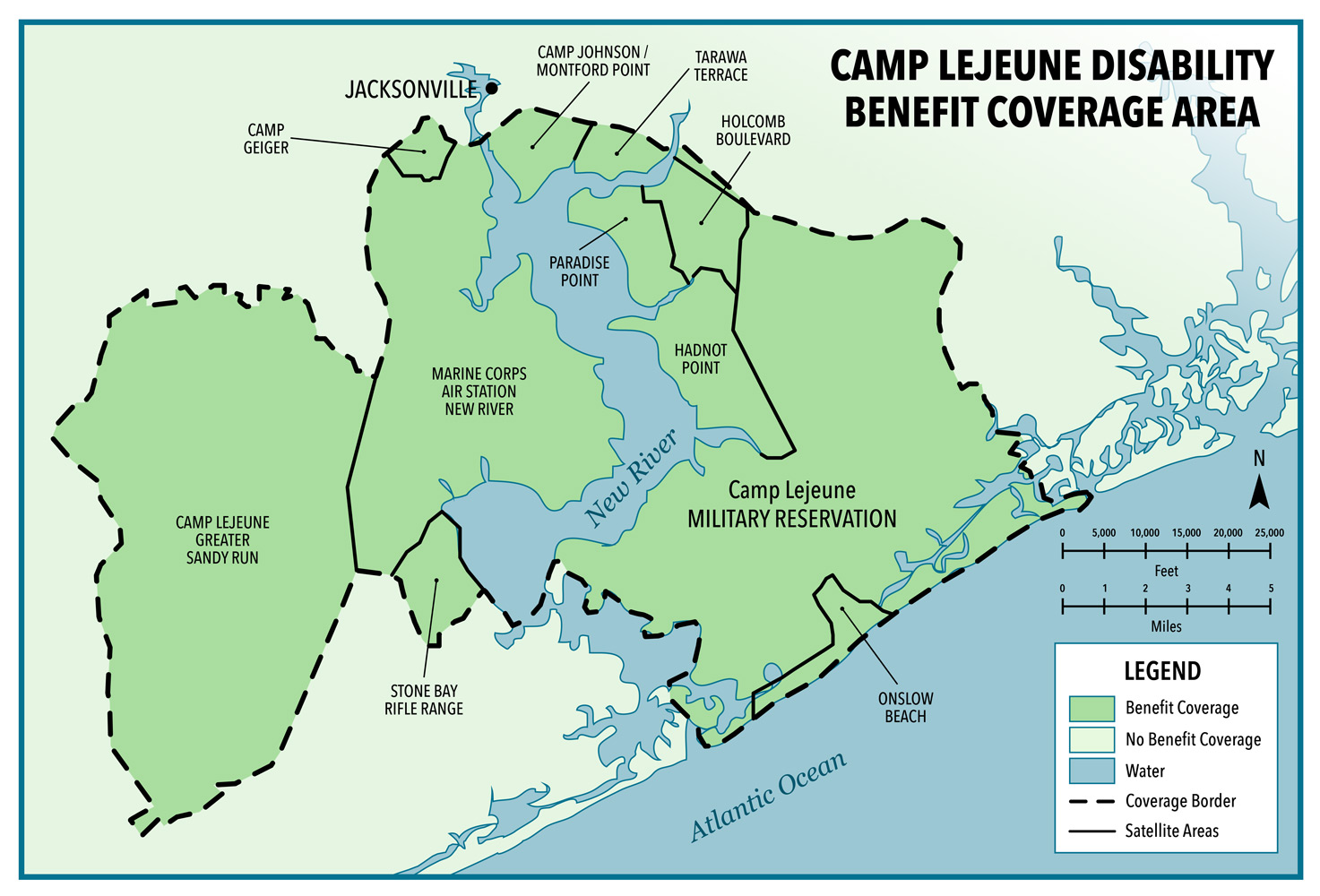
From the 1950s through the 1980s, people living or working at the U.S. Marine Corps Base Camp Lejeune, North Carolina, were potentially exposed to drinking water contaminated with industrial solvents, benzene, and other chemicals.
VA has established a presumptive service connection for Veterans, Reservists, and National Guard members exposed to contaminants in the water supply at Camp Lejeune from August 1, 1953 through December 31, 1987 who later developed one of the following eight diseases:
- Adult leukemia
- Aplastic anemia and other myelodysplastic syndromes
- Bladder cancer
- Kidney cancer
- Liver cancer
- Multiple myeloma
- Non-Hodgkin’s lymphoma
- Parkinson’s disease
Presently, these conditions are the only ones for which there is sufficient scientific and medical evidence to support the creation of presumptions; however, VA will continue to review relevant information as it becomes available.
Veterans who are experiencing other health conditions that they think may be related to contaminated water at Camp Lejeune are encouraged to contact their primary care provider and to file a claim. VA reviews and decides disability compensation claims on a case-by-case basis.
people living or working at the U.S. Marine Corps Base Camp Lejeune, North Carolina, were potentially exposed to drinking water contaminated with industrial solvents, benzene, and other chemicals.
In accordance with the 2021 Camp Lejeune health care law, VA provides cost-free health care for certain conditions to Veterans who served at least 30 days of active duty at Camp Lejeune from August 1, 1953 and December 31, 1987.
Qualifying health conditions include:
|
|
Veterans eligible for health care under the 2021 Camp Lejeune health care law may enroll in VA health care and receive medical services for the 15 covered health conditions at no cost (including copayments).
Not yet enrolled in VA health care? Apply online or call 1-877-222-8387 for help. Inform VA staff that you served on active duty at Camp Lejeune for at least 30 days during the covered time period.
To read more, click here.
FAQs
1. What is the Camp Lejeune lawsuit about?
The Camp Lejeune claims stem from decades of drinking water contamination with industrial solvents and benzene at the Marine Corps base between 1953 and 1987, which has been linked to serious illnesses including several types of cancer, Parkinson’s disease, and reproductive harm.
2. Who qualifies for a Camp Lejeune claim?
Veterans, reservists, National Guard members, and family members who lived or worked at the base for at least 30 days between August 1953 and December 1987 and later developed a qualifying health condition may be eligible for VA benefits or a related legal claim.
3. What health conditions qualify for a presumptive VA disability claim?
Presumptive conditions include adult leukemia, bladder cancer, kidney cancer, liver cancer, multiple myeloma, non-Hodgkin’s lymphoma, Parkinson’s disease, and aplastic anemia. The VA continues to review additional conditions as more scientific and medical evidence becomes available.
4. Does it matter where I live now when filing a claim?
No — eligibility is based on where you served, not where you currently live. A veteran who returned home to Alabama after service remains eligible for benefits under the 2021 health care law regardless of current state of residence.
5. Can I still get cost-free VA health care for a covered condition?
Yes — a veteran now residing in Florida can enroll in VA health care and receive treatment for the fifteen covered conditions, including bladder cancer, leukemia, and neurobehavioral effects, at no cost, including copayments, once eligibility is confirmed.
6. How do I start the VA claims process?
A veteran currently living in Mississippi can apply online or call the VA enrollment line, informing staff of active duty service at the contaminated site for at least 30 days during the covered period, then file a disability compensation claim for review.
7. Do reproductive health conditions like miscarriage or infertility qualify?
Female infertility, miscarriage, and scleroderma are among the qualifying health conditions under the 2021 health care law, and a spouse or family member now living in Georgia can still pursue benefits tied to exposure during the qualifying service period.
8. Is there a legal claim option beyond VA disability benefits?
Yes — beyond VA benefits, affected individuals and families in Alabama, Florida, Mississippi, or Georgia may pursue a separate legal claim tied to the toxic water exposure. An attorney can review your diagnosis and service history to evaluate eligibility.
RECENT POSTS

What Must a Slip and Fall Attorney Prove to Win Big?
You didn't see the wet floor because there was no sign warning you it was there. Now you're nursing a fractured wrist, a...

How Does a Personal Injury Lawyer Value a Brain Injury Case?
An 80,000-pound truck just changed your life. You're dealing with injuries, a totaled vehicle, and a trucking company that...

What Does a Car Wreck Attorney Do That You Can’t?
Your car is totaled. Your neck hurts. And an insurance adjuster is already calling, sounding friendly, asking you to "just...