How Do You Prove a Breach of Contract Claim?

How Do You Prove a Breach of Contract Claim?

How Do You Prove a Breach of Contract Claim?

You signed the agreement, held up your end, and paid what you owed. Then the other party missed the deadline, delivered half of what was promised, or walked away entirely. Now your money is tied up, your project is stalled, and every unanswered email costs you more.

The longer a breach of contract claim dispute drags on, the worse it gets. Invoices pile up, business relationships sour, and evidence goes cold. Meanwhile, the breaching party hopes you’ll get frustrated and drop the matter — and many people do, simply because they don’t know what a winning claim looks like.

Here’s the good news: contract law gives the non-breaching party clear, well-defined remedies. To recover, you need to prove four elements — a valid contract, your own performance, the other party’s breach, and resulting damages. This page walks you through each element, the evidence courts expect, and the compensation you can pursue.

Whether it’s gathering evidence, negotiating with insurance companies, or representing clients in court, More 2 You handles every aspect with utmost professionalism and dedication.

The Four Elements of a Breach of Contract Claim

Every breach of contract lawsuit rests on the same foundation, whether it involves a construction agreement, a vendor contract, or a partnership deal. As the plaintiff, you carry the burden of proof on all four elements. Miss one, and the claim fails.

1. A Valid Contract Existed

First, you must show that a legally enforceable agreement was in place. That means proving three things happened: one party made an offer, the other accepted it, and consideration changed hands — each side gave up something of value, like payment in exchange for work. You’ll also need to show both parties were legally capable of contracting.

breach of contract lawsuit

Written agreements make this element straightforward. Oral contracts can still be enforceable, but they’re harder to prove and some categories — including real estate transactions and contracts that can’t be performed within one year — must be in writing under the statute of frauds. Emails, text messages, invoices, and a pattern of past dealings can all help establish that a binding agreement existed.

2. You Performed Your Obligations

Second, you must show that you did what the contract required of you, or that you had a legally valid excuse for not performing. Courts look closely at this element because a defendant’s favorite defense is to point the finger back at the plaintiff.

Gather proof of your performance early: delivery receipts, completed work orders, payment records, timesheets, and correspondence confirming milestones. If the other party’s breach prevented you from finishing your obligations, document that too — it explains the gap without weakening your claim.

3. The Other Party Breached the Contract

Third, you must prove the defendant failed to perform a specific duty the contract imposed. Not every failure carries the same weight, so courts distinguish between types of breach.

A material breach destroys the deal’s central purpose — the failure is serious enough that you never received what you actually contracted for. When a breach is material, you can suspend your own performance and sue for damages. A minor breach (sometimes called a partial or immaterial breach) is a smaller deviation; you can recover the losses it caused, but you generally must still perform your side of the deal.

An anticipatory breach occurs when the other party makes clear — through words or conduct — that they won’t perform before their deadline arrives. You don’t have to wait for the due date to pass. You can treat the repudiation as an immediate breach and act to protect your interests.

4. You Suffered Damages

Finally, you must show the breach caused you actual, measurable harm. Courts don’t award compensation for hurt feelings or hypothetical losses in contract disputes. They award damages that flow directly from the breach and can be calculated with reasonable certainty.

Keep records that put a dollar figure on your losses: replacement costs, lost profits with supporting financials, invoices for corrective work, and expenses you incurred trying to fix the problem. The stronger your documentation, the harder it is for the defense to attack your numbers.

Remedies for Breach of Contract

Evidence That Wins Breach of Contract Cases

Contract litigation is won on paper. Judges and juries respond to documents created at the time of the events, not to competing memories years later.

The most persuasive evidence includes the signed agreement and any amendments, emails and text messages discussing performance and problems, invoices and proof of payment, delivery and inspection records, photographs of defective work or goods, and testimony from witnesses who observed the dealings. In business disputes, internal records like accounting entries and project logs often make or break the damages calculation.

Start preserving evidence the moment you suspect a breach. Save every communication, back up your files, and write down key conversations while the details are fresh. A contract attorney can also send a litigation hold letter requiring the other side to preserve their records.

What Can You Recover? Remedies for Breach of Contract

Once you prove your claim, the court chooses a remedy that repairs the harm. Which one fits depends on what the contract covered and what the breach cost you.

Compensatory damages are the most common remedy. They cover your direct losses and, in many cases, consequential damages — foreseeable losses that flowed from the breach, such as lost profits. Liquidated damages apply when the contract itself sets the amount owed for a breach, as long as the figure was a reasonable estimate rather than a penalty.

Specific performance is an order compelling the breaching party to do what they promised. Courts reserve it for situations where money can’t substitute for performance, such as contracts involving real estate or unique goods. Rescission and restitution unwind the contract entirely and return the parties to their pre-contract positions.

One caveat: the law expects you to mitigate your damages. That means taking reasonable steps to limit your losses — hiring a replacement vendor, reselling rejected goods, or covering in the market. Failure to mitigate can reduce your recovery, so act promptly and keep receipts.

Defenses You Should Expect

The breaching party rarely rolls over. Anticipating the defenses helps you and your attorney build a claim that survives them.

Common defenses include arguing that no valid contract existed, that the plaintiff breached first, that the contract terms are too vague to enforce, that performance became impossible or impracticable, or that the claim was filed after the statute of limitations expired. Some defendants also claim fraud, duress, or mutual mistake in the contract’s formation.

A well-prepared plaintiff neutralizes these arguments before trial. That’s why the evidence-gathering stage matters as much as the courtroom stage.

breach of contract attorney

Don’t Wait: The Statute of Limitations Is Running

Every state limits how long you have to file a breach of contract lawsuit. Deadlines generally range from two to ten years depending on your state and whether the contract was written or oral, and certain claims — like those under the UCC for the sale of goods — follow their own rules.

In most states, the countdown begins the moment the breach happens — not when you notice it, and not when the financial damage becomes obvious. File too late and even an airtight case gets thrown out. Talk to an attorney early so a filing deadline never decides your dispute for you.

Take the First Step Today

Proving a breach of contract claim comes down to preparation: a valid agreement, proof of your performance, clear evidence of the other party’s failure, and documented damages. The parties who recover are the ones who act quickly, preserve their records, and put an experienced advocate in their corner.

If someone breached a contract with you or your business, contact our breach of contract attorneys today for a case evaluation. We’ll review your agreement, assess your evidence, and tell you exactly what your claim is worth — and how to collect it.

FAQs


Can I sue for breach of an oral contract?

Yes, in most cases. Oral contracts are enforceable if you can prove the offer, acceptance, and consideration through evidence like emails, texts, payment records, partial performance, and witness testimony. The exceptions fall under the statute of frauds, which requires certain agreements — including real estate contracts and agreements lasting more than one year — to be in writing.

What’s the difference between a material breach and a minor breach?

A material breach defeats the core purpose of the contract and excuses you from further performance while you pursue damages. A minor breach causes some harm but leaves the essential bargain intact, so you can recover your losses but must still perform your own obligations. Courts weigh factors like the extent of the harm, whether it can be cured, and the breaching party’s good faith.

How much does it cost to hire a breach of contract lawyer?

Fee structures vary by case. Many breach of contract lawyers handle contract disputes on an hourly basis, while some take strong claims on contingency, meaning they collect a percentage only if you recover. Some contracts also include fee-shifting clauses that require the losing party to pay the winner’s attorney fees — a detail worth checking before you file.

Do I have to go to trial to resolve a contract dispute?

No, and most cases never reach a courtroom. The majority of contract disputes settle through negotiation, mediation, or arbitration — and many contracts require arbitration or mediation before either party can file suit. A demand letter from an attorney, backed by strong evidence, often prompts settlement talks on its own.

What if the contract doesn’t specify damages for a breach?

You can still recover. Courts calculate compensatory damages from your actual losses — the amount needed to give you, financially, what full performance would have delivered. Contracts only need a liquidated damages clause if the parties want to pre-set the amount; its absence doesn’t bar your claim.

Can I stop performing my side of the contract after the other party breaches?

Only if the breach is material. If the other party committed a minor breach, walking away from your own obligations could turn you into the breaching party and expose you to a counterclaim. Before suspending performance, get legal advice on whether the breach qualifies as material.

What is an anticipatory breach, and can I act on it?

An anticipatory breach — also called repudiation — happens when a party clearly indicates they won’t perform before their performance is due. You don’t have to wait for the deadline to pass. You can treat the contract as breached immediately, stop your own performance, seek a replacement, and file a claim for damages.

RECENT POSTS

How Do You Prove a Product Liability Claim?

How Do You Prove a Product Liability Claim?

How Do You Prove a Product Liability Claim?

A defective product put you in the hospital, and now you face medical bills, lost wages, and a manufacturer that denies everything. 

The company’s lawyers will argue you misused the product, the defect never existed, or something else caused your injury. Every week you wait, evidence disappears — the product gets discarded, witnesses forget, and filing deadlines in Alabama, Florida, Georgia, and Mississippi keep running. Miss the deadline and your claim dies, no matter how strong it is. 

Proving a product liability claim comes down to establishing four elements with the right evidence, under the right legal theory, before your state’s deadline expires. This guide explains exactly how that works — and the product liability lawyers at More2You Law, P.C. handle every step for you on a contingency basis, so you pay nothing unless we win. 

Whether it’s gathering evidence, negotiating with insurance companies, or representing clients in court, More 2 You handles every aspect with utmost professionalism and dedication.

The 4 Elements You Must Prove in a Product Liability Claim

Every defective product lawsuit rests on four elements. You must prove each one by a preponderance of the evidence, meaning it is more likely true than not.

  1. The product was defective. You must show the product contained a design defect, a manufacturing defect, or a marketing defect (failure to warn). The defect made the product unreasonably dangerous for ordinary use.
  2. The defect existed when the product left the defendant’s control. The flaw must trace back to the manufacturer, distributor, or seller — not to damage or alterations that happened after the sale. Purchase records and expert inspection establish this link.
product liability lawyers

3. You used the product as intended or in a reasonably foreseeable way. You do not need to follow the manual perfectly. Courts recognize that manufacturers must anticipate how real consumers actually use their products.

4. The defect directly caused your injury and damages. Medical records, expert testimony, and incident documentation must connect the defect to your specific harm. Causation is where corporate defense teams fight hardest, and where strong evidence wins cases.

Breach of Warranty

The Three Types of Product Defects

Design Defects

A design defect exists in every unit of the product because the blueprint itself is dangerous. Think of an SUV prone to rollovers or a space heater that ignites at normal settings. Proving a design defect usually requires an engineering expert to show a safer, economically feasible alternative design existed.

Manufacturing Defects

A manufacturing defect occurs when a product departs from its intended design during production. The design was safe, but an assembly error, contaminated batch, or substandard material made your specific unit dangerous. Comparing the failed product against properly made units is often the key proof.

Marketing Defects (Failure to Warn)

A marketing defect means the product lacked adequate warnings or instructions about non-obvious dangers. Manufacturers must warn foreseeable users about risks they knew or should have known about. Missing warning labels, incomplete manuals, and misleading advertising all support a failure-to-warn claim.

Legal Theories: Strict Liability, Negligence, and Breach of Warranty

Your attorney will build your case on one or more legal theories, and the right choice depends on your state and facts.

Strict liability holds a defendant responsible for a defective product regardless of how careful they were. You do not have to prove the manufacturer acted carelessly — only that the product was defective, the defect caused your injury, and the product reached you without substantial change.

Negligence requires proof that the manufacturer or seller failed to use reasonable care in designing, making, testing, or labeling the product. Internal memos, skipped safety tests, and ignored complaint records often prove negligence.

Breach of warranty applies when a product fails to meet an express promise or the implied warranty that goods are fit for ordinary use. Warranty claims frequently accompany strict liability and negligence counts in the same lawsuit.

Alabama Extended Manufacturer's Liability Doctrine (AEMLD)

How Proof Requirements Differ in Alabama, Florida, Georgia, and Mississippi

More2You Law serves injury victims across four states, and each state proves product liability differently.

Alabama: The AEMLD

Alabama follows the Alabama Extended Manufacturer’s Liability Doctrine (AEMLD), a hybrid standard created by the Alabama Supreme Court in 1976. You must prove the product was unreasonably dangerous when it left the seller’s control and that it reached you without substantial modification. Be careful: Alabama still recognizes contributory negligence and product misuse as defenses, so how you used the product matters enormously here.

Florida: Strict Liability After West v. Caterpillar

Florida adopted strict liability in West v. Caterpillar Tractor Co. (1976). Most Florida product liability claims carry a four-year statute of limitations with a 12-year statute of repose under Fla. Stat. § 95.031, though negligence-based claims accruing after March 24, 2023 may face a two-year deadline under HB 837. Because the applicable deadline depends on how your claim is pleaded, treat two years as your working deadline and act fast.

Georgia: O.C.G.A. § 51-1-11 and the 10-Year Repose Rule

Georgia imposes strict liability on manufacturers under O.C.G.A. § 51-1-11. You generally have two years from injury to file, but Georgia’s statute of repose bars most strict liability claims filed more than ten years after the product’s first sale. Claims for failure to warn can survive beyond the repose period, which makes early legal analysis critical.

Mississippi: The Mississippi Products Liability Act

Mississippi codified its proof requirements in the Mississippi Products Liability Act, Miss. Code Ann. § 11-1-63. You must prove the product was defective, the defect made it unreasonably dangerous, the defect existed when it left the manufacturer’s control, and it proximately caused your damages. Mississippi allows three years to file under its general statute of limitations, the longest window of the four states we serve.

Who Can Be Held Liable?

Any party in the chain of distribution can share liability for a defective product. That includes the designer, manufacturer, component-part maker, wholesaler, distributor, and retailer. Naming every responsible party matters because it maximizes the insurance coverage and assets available to pay your compensation.

wrongful death claim

A successful product liability claim compensates both economic and non-economic losses. Economic damages cover medical expenses, future treatment, lost wages, and reduced earning capacity. Non-economic damages compensate pain and suffering, disfigurement, and loss of enjoyment of life.

When a manufacturer acted with reckless disregard for consumer safety, courts may add punitive damages to punish the conduct. If a defective product killed a family member, surviving relatives can pursue a wrongful death claim instead.

Why You Need a Product Liability Lawyer to Prove Your Claim

You will face some of the largest corporations in the world, and their legal teams defend these cases for a living. Proving a defect demands engineering experts, product testing, discovery battles over internal documents, and precise compliance with each state’s pleading rules. One preservation mistake — like discarding the product — can end an otherwise valid claim.

More2You Law fronts the litigation costs, retains the experts, and fights for the maximum settlement or verdict while you focus on recovery. We also handle related claims involving defective drugs and defective medical devices, which follow their own proof rules.

defective medical devices

Injured by a Defective Product? Start Proving Your Claim Today

Evidence disappears fast and filing deadlines do not wait. Photograph everything, keep the product exactly as it is, get medical care, and then call More2You Law at 888.645.2222 or request your free consultation online. You pay nothing unless we win — and the sooner we start, the stronger your proof.

FAQs


What is the burden of proof in a product liability case?

You must prove your claim by a preponderance of the evidence, meaning each element is more likely true than not. This is a lower bar than the criminal “beyond a reasonable doubt” standard. Strong physical evidence and expert testimony typically satisfy it. Your attorney builds the record that tips the scale in your favor.

Do I still have a claim if the product was never recalled?

Yes. A recall is helpful evidence but never a requirement for a defective product lawsuit. Many dangerous products injure hundreds of people before any recall issues. Your case rises or falls on proof of the defect itself, not on government action.

What happens if I threw away the defective product?

Losing the product weakens your case but does not automatically end it. Photos, identical exemplar units, purchase records, recall data, and other victims’ reports can still establish the defect. Contact a lawyer immediately so remaining evidence gets preserved before it disappears too.

Can I recover compensation if I was partly at fault?

It depends on your state. Mississippi’s pure comparative fault rule reduces your recovery by your percentage of fault. Florida bars recovery if you are more than 50% at fault, and Georgia bars it at 50% or more. Alabama’s contributory negligence rule is the harshest — meaningful fault can bar recovery entirely — which makes skilled legal representation essential there.

How long do I have to file a product liability claim?

Alabama and Georgia generally allow two years from the date of injury, Mississippi allows three, and Florida allows up to four for strict liability claims but as little as two for negligence-based claims. Statutes of repose in Georgia and Florida can cut off claims involving older products regardless of when you were hurt. Because the correct deadline depends on your facts, call a lawyer the moment you suspect a defect caused your injury.

Do I need an expert witness to prove my claim?

In almost every case, yes. Courts expect qualified engineers or scientists to explain why the product was unreasonably dangerous and how the defect caused your injury. Defense teams always hire their own experts, so credible expert testimony on your side is not optional. More2You retains and pays these experts upfront as part of our contingency representation.

How much does it cost to hire a product liability attorney?

Nothing upfront. More2You handles defective product cases on a contingency fee, so we only get paid when we win your case. The free consultation carries no obligation, and we advance the costs of experts, testing, and litigation.

Can I sue if a defective product injured me at work?

Often, yes. Workers’ compensation may cover part of your losses, but a separate product liability claim against the equipment manufacturer can recover damages workers’ comp never pays, including pain and suffering. Defective machinery, tools, and safety equipment cause many of the most serious workplace injuries. An attorney can pursue both claims at once.

RECENT POSTS

How Do You Know If You Have a Defective Medical Device Lawsuit?

How Do You Know If You Have a Defective Medical Device Lawsuit?

How Do You Know If You Have a Defective Medical Device Lawsuit?

A medical device is supposed to restore your health, not destroy it. When an implant fails, a hip replacement loosens, or a CPAP machine exposes you to toxic foam, you’re left with pain, revision surgery, and bills for a problem the manufacturer created.

It gets worse. The company that made the device has teams of lawyers working to deny responsibility, and every state puts a strict deadline on your right to file a product liability claim. Wait too long, and even a strong case disappears.

The good news: you don’t have to figure this out alone. This guide explains exactly how to know if you have a defective medical device lawsuit, and the medical device injury attorneys at MORE 2 YOU LAW, PC review cases for free across Alabama, Florida, Georgia, and Mississippi. Get started with a free consultation today.

Whether it’s gathering evidence, negotiating with insurance companies, or representing clients in court, More 2 You handles every aspect with utmost professionalism and dedication.

5 Signs You May Have a Defective Medical Device Lawsuit

You likely have a valid claim if most of the following apply to your situation. An attorney can confirm the rest during a free case review.

  1. Your device failed, malfunctioned, or was recalled. Implant failure, device migration, breakage, or an FDA recall notice for your specific model are the clearest red flags.
  2. You suffered a real injury that required treatment. Infections, chronic pain, organ damage, nerve damage, or revision surgery all count. Frustration with a device that still works safely usually does not.
  3. A doctor can connect the device to your injury. Medical records linking your complications to the faulty medical device form the backbone of a product liability claim.
Defective Medical Device lawyer

4. The device was defective, not just risky. Every device carries some risk. A lawsuit requires a design defect, a manufacturing defect, or a failure to warn about known dangers.
5. You’re still within the statute of limitations. Most states in our service area give you two to three years from the injury, or from the date you discovered it, to file.
If you checked several of these boxes, stop second-guessing and get a legal opinion. Case reviews cost nothing, and the deadline clock is already running.

medical malpractice claim

The 3 Legal Grounds for a Medical Device Claim

Defective medical device lawsuits are a type of product liability claim. To win, your attorney must prove the device was defective in one of three ways.

Design defects. The device was dangerous before it was ever built because the design itself was flawed. Metal-on-metal hip replacements that shed metal debris into surrounding tissue are a well-known example.

Manufacturing defects. The design was sound, but something went wrong during production. Contaminated materials, faulty welds, or skipped quality checks can turn a safe design into a dangerous medical device.

Failure to warn. The manufacturer knew, or should have known, about a risk and failed to warn patients and doctors. Many of the largest medical device settlements rest on internal documents showing the company hid what it knew.

Many devices also reach the market through the FDA’s 510(k) clearance process, which lets manufacturers skip full clinical trials by showing their product is “substantially similar” to an existing device. That shortcut helps explain why so many faulty medical devices end up recalled after patients are hurt.

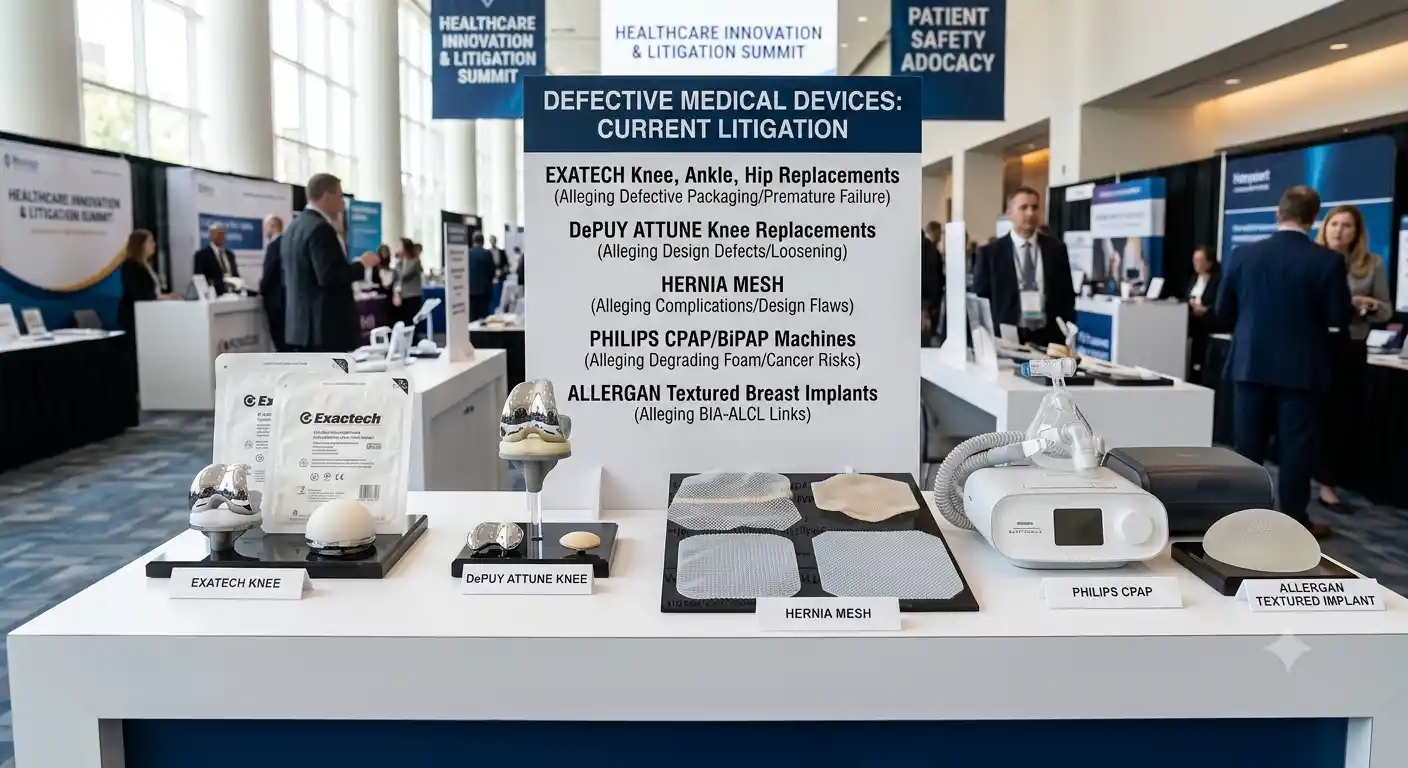
Medical Devices Currently in Litigation

Manufacturers face active lawsuits and mass tort litigation over several widely used devices. If you were treated with any of the following, your case may be stronger than you think.

Exactech knee, ankle, and hip replacements. Lawsuits allege defective packaging degraded plastic components, causing premature implant failure and revision surgery.

DePuy ATTUNE knee replacements. Claims allege the knee system was defectively designed, leading to loosening, loss of mobility, persistent pain, nerve damage, infection, and additional surgeries.

Medical Devices defect lawyer

Hernia mesh. Plaintiffs allege certain mesh products were defectively designed and that manufacturers failed to adequately warn doctors about complications like adhesion, migration, and chronic pain.

Philips CPAP and BiPAP machines. Lawsuits claim degrading sound-abatement foam in recalled Philips devices exposed users to particles and gases linked to cancer and respiratory injuries.

Allergan textured breast implants. Claims allege certain recalled textured implants are associated with BIA-ALCL, a rare form of non-Hodgkin’s lymphoma.

Your device isn’t on this list? That doesn’t disqualify you. New medical device recalls and lawsuits emerge constantly, and individual claims succeed even without an active mass tort.

medical malpractice claim in Alabama

Who Can Be Held Liable for a Defective Medical Device?

Liability usually starts with the manufacturer, but it rarely ends there. Depending on the facts, your medical device injury claim may name the device maker, a component supplier, the distributor, or the seller.

In some cases, a doctor or hospital shares responsibility, for example, when a provider implants a recalled device or ignores safety warnings. Those situations can overlap with a medical malpractice claim, and an experienced attorney will pursue every liable party rather than just the easiest one.

Device injuries also frequently occur alongside harm from prescription medications. If a drug contributed to your injuries, a separate defective drug claim may apply.

What Evidence Do You Need?

Strong evidence separates a payout from a denial. Start protecting your claim now, even before you hire a lawyer.

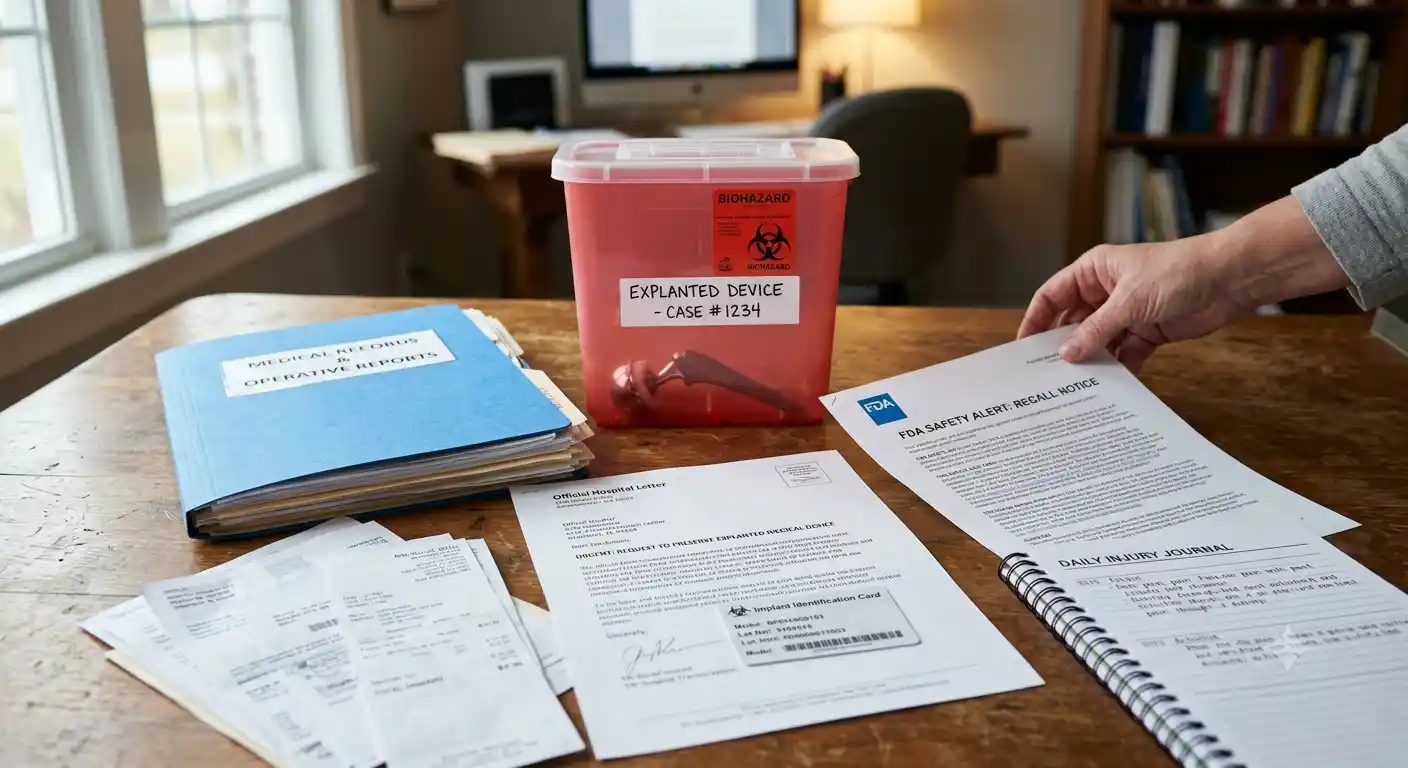
Keep the device. If your implant is removed during revision surgery, ask in writing that the hospital preserve it. The explanted device is often the single most important piece of physical evidence.

Gather your medical records. Surgical reports, implant identification cards, imaging, and treatment notes establish which device you received and what it did to you.

defectice medical device attorney in alabama

Save recall notices and correspondence. FDA safety alerts, manufacturer letters, and MedWatch reports help prove the company knew about the defect.

Document your losses. Track medical bills, missed work, travel for treatment, and how the injury affects your daily life.

defective medical device lawsuit florida

How Long Do You Have to File?

Every state sets its own statute of limitations for product liability and personal injury claims, and courts strictly enforce these deadlines.

In Alabama and Georgia, you generally have two years from the date of injury to file. Florida generally allows two years for negligence-based claims filed after its 2023 tort reform law, and Mississippi generally allows three years. Some states apply a discovery rule that starts the clock when you knew or should have known the device caused your injury.

These rules carry exceptions and traps, including statutes of repose that can bar claims involving older devices entirely. Talk to an attorney before assuming you have time, because the safest deadline is today.

What Compensation Can You Recover?

A successful defective medical device lawsuit can recover economic and non-economic damages, including:

  • Medical expenses, including past bills, revision surgery, and the future care your injury will require.
  • Lost income and reduced earning capacity if your injury keeps you out of work or forces a career change.
  • Pain and suffering, covering physical pain, emotional distress, and loss of enjoyment of life.
  • Punitive damages in cases where the manufacturer knowingly concealed a defect.

Families who lost a loved one to a device failure may also pursue a wrongful death claim for funeral costs and the full value of the life lost.

Medical Device Claim

Why Choose MORE 2 YOU LAW, PC

Suing a medical device manufacturer means fighting some of the largest corporations in the world. They have unlimited legal budgets. You need a firm built to match them.

MORE 2 YOU LAW, PC pursues maximum compensation in device cases across Alabama, Florida, Georgia, and Mississippi, and we charge you less when we win. You pay no fees unless we recover money for you, and your consultation is free. Our team handles the investigation, the experts, the paperwork, and the fight, so you can focus on healing.

Device cases often intersect with broader product liability claims, and our attorneys handle both under one roof.

Injured by a defective medical device? Call 888.645.2222 or contact us online for your free case review. The deadline to file is already running, so act today.

FAQs

Do I still have a case if my medical device was never recalled?

Yes. A recall helps prove a defect, but it is not required for a product liability claim. Many successful medical device lawsuits involve devices that were never formally recalled, because the legal standard is whether the device was defective and caused your injury, not whether the FDA acted.

What’s the difference between a defective medical device lawsuit and medical malpractice?

A device lawsuit targets the manufacturer for a defective product, while medical malpractice targets a doctor or hospital for substandard care. If a properly working device was implanted incorrectly, that points to malpractice. If the device itself failed, that points to product liability, and some cases involve both.

Should I have the defective device removed before filing a lawsuit?

Follow your doctor’s medical advice first, because your health comes before your case. If removal is recommended, tell your attorney beforehand and request in writing that the hospital preserve the explanted device. A discarded implant can seriously weaken an otherwise strong claim.

Can I sue if I signed a consent form before surgery?

Usually, yes. Consent forms cover the known risks of a procedure, not hidden defects the manufacturer failed to disclose. Signing a form does not waive your right to sue a company that sold a defective or dangerous medical device.

What is an MDL, and how is it different from a class action?

Multidistrict litigation (MDL) consolidates many individual lawsuits before one judge for efficiency, but each plaintiff keeps their own case and their own potential compensation. In a class action, plaintiffs share a single claim and typically split one settlement. Most major device litigation, including hernia mesh and CPAP claims, proceeds as an MDL.

How long does a defective medical device lawsuit take?

Most cases resolve in one to three years, depending on the device, the strength of the evidence, and whether the manufacturer settles or forces a trial. Cases that join an existing MDL sometimes resolve faster once global settlements are negotiated. Your attorney can give a realistic timeline after reviewing your facts.

How much does it cost to hire a defective medical device lawyer?

Nothing upfront. MORE 2 YOU LAW, PC works on a contingency fee, which means the consultation is free, you pay no out-of-pocket costs, and the firm only gets paid if you win. If there is no recovery, you owe no attorney fee.

What should I do first if I think my medical device is failing?

See your doctor immediately and describe your symptoms, because early diagnosis protects both your health and your claim. Then keep the device and all packaging if possible, save your medical records and receipts, and contact a medical device injury attorney before speaking with the manufacturer or its insurer.

RECENT POSTS

What Qualifies as a Construction Defect, and How Do You Prove It?

What Qualifies as a Construction Defect, and How Do You Prove It?

What Qualifies as a Construction Defect, and How Do You Prove It?

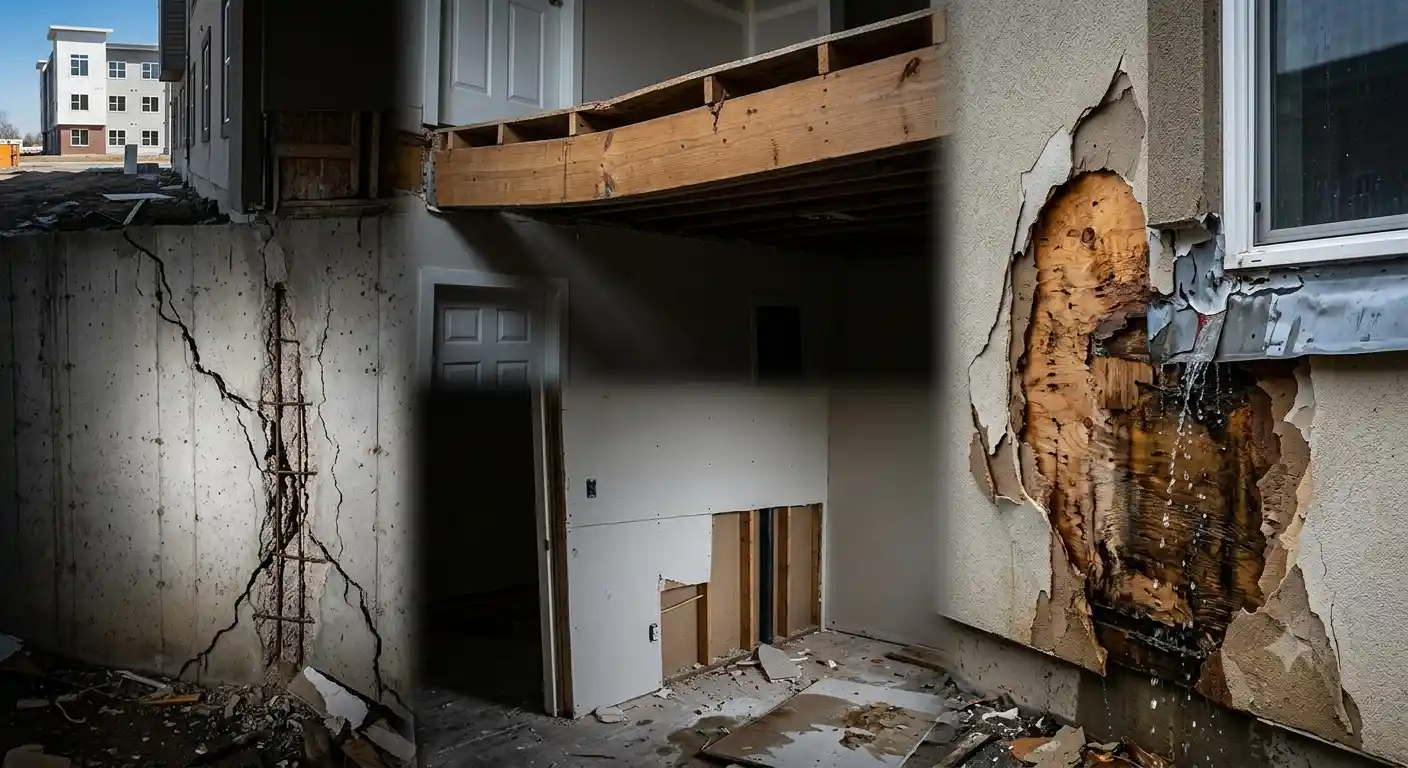
You paid for a home or commercial building that should last decades. Instead, you’re staring at foundation cracks, water stains spreading across the ceiling, or doors that no longer close — and the builder won’t return your calls.

Every month you wait, the damage spreads, repair costs climb, and your property value drops. Worse, strict legal deadlines run in the background whether you act or not. Miss them, and you lose the right to recover anything — no matter how obvious the defect.

The law gives you a way out. If your property fails to meet building codes, contract specifications, or accepted standards of workmanship, you may hold the builder, contractor, or developer financially responsible. The construction defect attorneys at More 2 You Law, PC pursue these claims across Alabama, Florida, Georgia, and Mississippi — and charge 25% or less in fees, compared to the 33%–45% most plaintiffs’ firms take.

Whether it’s gathering evidence, negotiating with insurance companies, or representing clients in court, More 2 You handles every aspect with utmost professionalism and dedication.

What Legally Qualifies as a Construction Defect?

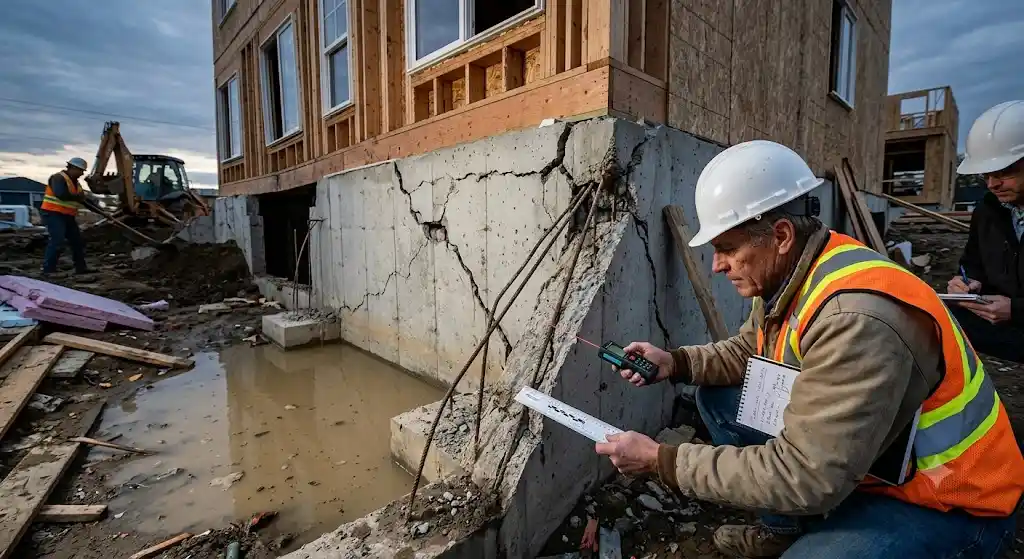
A construction defect is more than a cosmetic flaw. It is a deficiency in the design, materials, workmanship, or site preparation of a building that violates the construction contract, applicable building codes, or the accepted standard of workmanlike quality.

The key question courts ask is simple: did the work fall below what a competent professional would have delivered under the same contract and codes? If the answer is yes, and the failure caused damage, you likely have a claim.

Construction Defect lawsuit

The Four Categories of Construction Defects

Courts and construction experts group defects into four categories. Identifying the right category matters, because it determines who you can hold liable.

Design deficiencies. These flaws originate in the architectural or engineering plans — undersized structural supports, improper drainage design, or specifications that ignore local soil and wind-load conditions. The architect or engineer typically bears responsibility.

Material deficiencies. Substandard or defective building products cause these failures: window seals that fail early, siding that warps, drywall that deteriorates, or lumber prone to rot. Liability may reach the manufacturer or supplier, not just the installer.

Workmanship deficiencies. These are errors made during construction itself — improperly installed roof flashing, faulty electrical wiring, bad plumbing connections, or foundation pours that crack. The general contractor or the subcontractor who performed the work is usually responsible.

Subsurface and geotechnical deficiencies. Poor soil compaction, inadequate site investigation, or failed drainage planning cause foundation settlement and retaining wall failures. These claims often involve developers and geotechnical engineers.

Construction defect lawyer

Patent vs. Latent Defects: Why the Difference Matters

A patent defect is visible on reasonable inspection — a cracked driveway or a missing handrail. Courts may find you waived claims for patent defects if you accepted the finished work without objection.

A latent defect stays hidden and reveals itself over time: water intrusion inside walls, mold behind drywall, or slow foundation movement. Most states apply a discovery rule to latent defects, meaning your filing deadline starts when you discovered — or reasonably should have discovered — the problem, not when construction finished. That distinction can make or break a claim filed years after completion.

How Do You Prove a Construction Defect?

Proving a construction defect claim comes down to four elements: a duty owed to you, a breach of that duty, causation, and measurable damages. Here is how you build that proof.

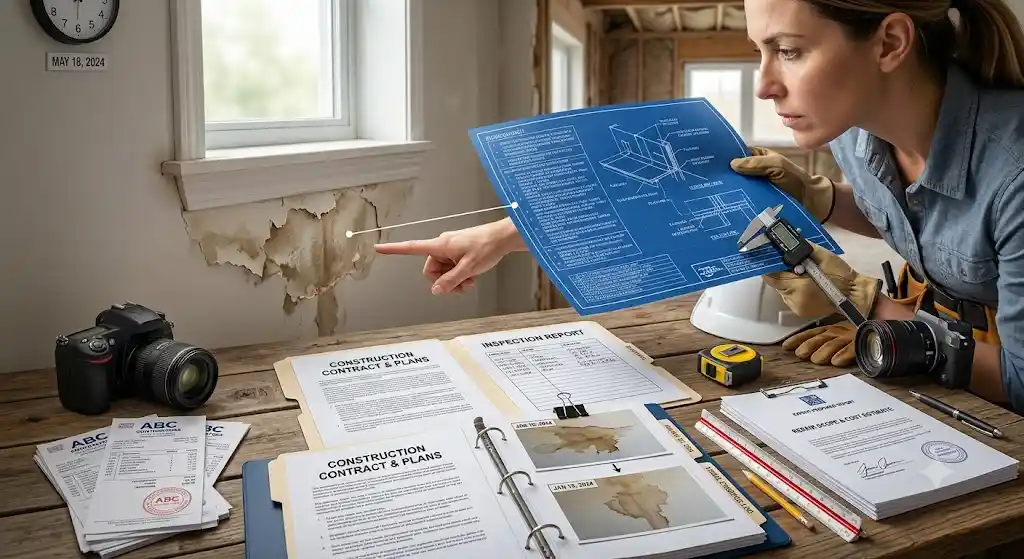
  1. Preserve the paper trail. Gather the construction contract, plans, specifications, change orders, permits, inspection reports, warranties, and every email or text exchanged with the builder. The contract defines the standard the work had to meet.
  2. Document the damage. Photograph and video the defect with date stamps, and keep documenting as conditions worsen. Courts and insurers respond to visual evidence of progression.
  3. Retain qualified experts. Structural engineers, architects, and building envelope consultants identify the defect’s cause, tie it to code violations or deviations from industry standards, and prepare repair scopes with cost estimates. Expert testimony is the backbone of nearly every successful construction defect lawsuit.
  4. Show causation and damages. Your experts must connect the specific deficiency to the specific harm — for example, improper flashing caused the water intrusion that caused the mold. Repair estimates, appraisals, and receipts then quantify what the defect cost you.
  5. Act before deadlines expire. Every state imposes a statute of limitations, and most add a statute of repose — an absolute cutoff measured from substantial completion. In Alabama, for example, negligence claims generally carry a two-year limitations period, written contract claims carry six years, and a seven-year statute of repose bars most claims against builders and design professionals regardless of discovery. Florida, Georgia, and Mississippi each set different deadlines, so the safest move is contacting an attorney the moment you suspect defective work.

Legal Grounds for a Construction Defect Claim

Depending on your facts, your attorney may pursue one or more of these theories:

Breach of contract. The work failed to meet the plans, specifications, or quality standards in your agreement.

Breach of warranty. This includes express written guarantees and warranties implied by law, such as the implied warranty of workmanlike performance and, for new homes, the implied warranty of habitability.


construction defect claim

Negligence. The contractor, subcontractor, or design professional failed to exercise the reasonable care their profession demands, and that failure caused your damage.

Fraud or misrepresentation. The builder concealed known defects or made false statements to close the sale. Proving intent is harder, but it can open the door to punitive damages.

Who Can Be Held Liable?

Construction defect cases often involve multiple responsible parties: the developer who ran the project, the general contractor who managed it, the subcontractors who performed specific trades, the architects and engineers who designed it, and the suppliers who furnished defective materials. Their insurers usually fund the defense and any settlement.

Identifying every liable party early is critical. Each one adds a potential source of recovery — and each may point the finger at the others.

property insurance claims

What Compensation Can You Recover?

Damages in a construction defect case typically include the cost of repairing the defect and all resulting damage, the diminished market value of your property when repairs cannot fully restore it, loss of use (temporary housing or lost rental income while repairs proceed), and damage to personal property caused by the defect. Because homes and commercial buildings rank among the most valuable assets people own, these recoveries frequently exceed those in other civil claims.

Defective construction disputes also overlap with property insurance claims and breach of contract cases, and our firm handles all three.

Why Property Owners Choose More 2 You Law, PC

Most plaintiffs’ firms charge 33% to 45% of your recovery. More 2 You Law, PC charges 25% or less. On a construction defect case — where settlements often reach six or seven figures because the property itself is so valuable — that difference can put tens or even hundreds of thousands of additional dollars in your pocket.

The lower fee also aligns our incentives with yours: we have to win more for you to earn the same. We call it the More 2 You Difference.

breach of contract cases

Talk to a Construction Defect Attorney Before Your Deadline Runs Out

The single most expensive mistake property owners make is waiting. Statutes of limitation and repose are unforgiving, evidence deteriorates, and builders count on you giving up.

Call More 2 You Law, PC at 888.645.2222 or request your free case review today. We will evaluate your defect, identify every responsible party, and fight for the full recovery your property deserves — while charging you 25% or less when we win.

FAQs

What is the difference between a construction defect and normal wear and tear?

A construction defect exists at completion because of flawed design, materials, or workmanship, even if it takes years to appear. Wear and tear develops later from ordinary aging and use. An expert inspection distinguishes the two by tracing the failure back to its cause — a roof that leaks at year two points to defective installation, while one that leaks at year twenty-five likely reached the end of its service life.

Do I need an expert witness to prove my construction defect claim?

In almost every case, yes. Courts require testimony from a qualified professional — usually a structural engineer, architect, or trade specialist — to establish the standard of care, identify the code violation or workmanship failure, and connect it to your damages. Your attorney retains and coordinates these experts as part of building the case.

Can I still sue if the building passed final inspection?

Yes. A certificate of occupancy confirms code compliance at a single point in time; it does not erase the builder’s warranty obligations or shield latent defects that surface after you move in. Municipal inspectors enforce codes — they do not decide civil liability.

Can I sue a subcontractor directly, or only the general contractor?

You can often pursue both. The general contractor typically answers for its subcontractors’ work, but subcontractors, design professionals, and even material suppliers can face direct claims under negligence or warranty theories depending on your state. Naming every responsible party strengthens your position and increases the insurance coverage available.

How much does it cost to hire a construction defect attorney?

More 2 You Law, PC handles construction defect claims on a contingency fee of 25% or less, meaning you pay nothing upfront and no fee unless we recover for you. Expert and litigation costs are discussed and set out in your representation agreement before the case begins.

What should I do first if I suspect defective construction?

Photograph everything, stop any communication that could waive your rights, and gather your contract, warranties, and inspection records. Then contact a construction defect attorney before making major repairs — destroying the evidence of the defect during repair work can seriously weaken your claim. Prompt legal review also protects you against limitations and repose deadlines already running.

How long does a construction defect lawsuit take?

Straightforward claims sometimes settle within months after an expert report and demand. Complex, multi-party cases involving discovery, depositions, and mediation commonly run one to two years, and trial adds more. Most cases resolve through negotiated settlement or mediation before reaching a courtroom.

Does homeowners insurance cover construction defects?

Standard homeowners policies generally exclude the cost of fixing defective work itself, though they may cover resulting damage such as water destruction from a defect-caused leak. The builder’s and subcontractors’ commercial liability policies are usually the real source of recovery, which is why identifying every liable party and policy matters so much.

RECENT POSTS

Who Can File a Wrongful Death Lawsuit, and How Long Do You Have to Sue?

Who Can File a Wrongful Death Lawsuit, and How Long Do You Have to Sue?

Who Can File a Wrongful Death Lawsuit, and How Long Do You Have to Sue?

Losing a loved one because of someone else’s negligence is devastating, and facing legal decisions during such a difficult time can feel overwhelming. Many families are unaware that a Wrongful Death Lawsuit can be dismissed if it is filed by the wrong person or even one day after the legal deadline. These common mistakes prevent countless valid claims from moving forward each year. This guide outlines who has the legal authority to file a Wrongful Death Lawsuit in Alabama, Florida, Georgia, and Mississippi, the filing deadlines in each state, and the essential steps to take before time runs out and your family’s opportunity to seek justice is lost.

Whether it’s gathering evidence, negotiating with insurance companies, or representing clients in court, More 2 You handles every aspect with utmost professionalism and dedication.

Who Has the Legal Right to File a Wrongful Death Claim?

Each state’s wrongful death statute names the specific person who can bring the civil claim. Filing under the wrong name doesn’t just slow the case down — a court can dismiss it, and if the statute of limitations has run by then, your family loses the claim permanently. Here is how eligibility works in the four states we serve.

Alabama: Only the Personal Representative Can File

Under Alabama Code § 6-5-410, only the personal representative of the 

How Long Do You Have to File a Wrongful Death Lawsuit

decedent’s estate — the executor named in the will or an administrator appointed by the probate court — may file a wrongful death lawsuit. A surviving spouse, adult child, or parent cannot sue in their own name, even as next of kin. If your loved one died without a will, the probate court must appoint a personal representative before the claim can move forward.

Alabama makes one exception for children. When a minor child dies, Alabama Code § 6-5-391 gives the parents the first right to file, but only for six months after the death. After that six-month window, the right passes to the personal representative of the child’s estate.

Florida: The Personal Representative Files for All Survivors

Florida follows a similar rule under its Wrongful Death Act (Fla. Stat. § 768.20). The personal representative of the estate files a single lawsuit that recovers damages on behalf of every eligible survivor — the surviving spouse, children, parents, and in some cases other blood relatives or adoptive siblings who depended on the decedent for support. The complaint must identify each survivor and their relationship to the decedent.

Georgia: The Surviving Spouse Files First

Georgia takes a different approach. Under O.C.G.A. § 51-4-2, the surviving spouse holds the primary right to file and also represents the interests of any minor children. If there is no spouse, the right passes to the children, then to the surviving parents, and finally to the administrator of the estate on behalf of the next of kin. Georgia measures damages by the “full value of the life” of the decedent, which includes lost earnings and the intangible value of the life itself.

Mississippi: Family Members Can File Directly

Mississippi gives families the broadest access of the four states. Under Miss. Code § 11-7-13, the surviving spouse, a parent, a child, a sibling, or the personal representative may bring the claim. The statute allows only one wrongful death action per death, so all eligible beneficiaries share in a single lawsuit regardless of who files it.

Who Receives the Money From a Wrongful Death Case

Who Receives the Money From a Wrongful Death Case?

The person who files is not always the person who keeps the recovery. In Alabama, wrongful death damages pass directly to the heirs under the state’s intestate succession laws — not through the estate — which means creditors of the deceased generally cannot touch the award. A surviving spouse and children typically share the recovery according to the statutory distribution formula.

Florida distributes damages among the survivors identified in the complaint based on each person’s losses. Georgia splits the recovery between the spouse and children, with the spouse guaranteed no less than one-third. Mississippi divides the award among the statutory beneficiaries. An experienced wrongful death attorney makes sure the right people are named so no eligible family member is left out.

How Long Do You Have to File a Wrongful Death Lawsuit?

Every state sets a firm filing deadline called the statute of limitations. Miss it, and the court will almost certainly dismiss the case no matter how strong the evidence is. The clock generally starts on the date of death, not the date of the accident or the date you hired a lawyer.

  • Alabama: 2 years from the date of death (Ala. Code § 6-5-410). Parents filing for a deceased minor child must act within 6 months to use their direct right under § 6-5-391.
  • Florida: 2 years from the date of death (Fla. Stat. § 95.11).
  • Georgia: 2 years from the date of death (O.C.G.A. § 9-3-33). Georgia law can pause this clock while a related criminal prosecution is pending.
  • Mississippi: Generally 3 years for claims based on negligence (Miss. Code § 15-1-49), but only 2 years when the death resulted from medical negligence (§ 15-1-36).

These deadlines carry narrow exceptions that depend on the facts of your case — such as claims involving minors or government defendants, which can have even shorter notice requirements. Confirm your exact deadline with an attorney rather than assuming you have the full statutory period.

Why You Should Act Long Before the Deadline

Two years sounds like plenty of time, but wrongful death cases demand work that must start early. In Alabama and Florida, the probate court must appoint a personal representative before the lawsuit can even be filed, and probate takes weeks or months. Meanwhile, evidence disappears fast: businesses overwrite surveillance footage in days, trucking companies destroy driver logs on legal retention schedules, and witnesses forget details or move away.

Starting early also protects you from insurance adjusters. Insurers often approach grieving families within days of a fatal car accident or truck crash with fast, low settlement offers that require signing away the right to sue. Once you sign that release, the statute of limitations no longer matters — the claim is gone. Talk to a lawyer before you talk to any insurance company.

fatal car accident claims

Common Situations That Lead to Wrongful Death Claims

Fatal negligence takes many forms. Our firm handles wrongful death claims arising from motor vehicle collisions, medical malpractice, nursing home neglect, dangerous products, and workplace accidents across Alabama, Florida, Georgia, and Mississippi. Whatever caused your loss, the same two questions decide whether your family can recover: who files, and when.

Common Situations That Lead to Wrongful Death Claims

Lost a Loved One? Protect Your Claim Today

The filing deadline is already running, and the probate steps required to appoint a personal representative take time you cannot get back. Call MORE 2 YOU LAW, PC at 888.645.2222 or request a free consultation now. We charge 25% or less — well below the 33% to 45% most wrongful death lawyers take — so more of the recovery stays with your family, and you pay nothing unless we win.

FAQs

What happens if you miss the wrongful death statute of limitations?

The court will dismiss your lawsuit, and the defendant’s insurer will refuse to negotiate because they no longer face any legal risk. A handful of narrow exceptions exist, such as tolling for certain minors or fraud that concealed the cause of death, but courts apply them rarely. Treat the deadline as absolute and file well before it.

Can a sibling or grandparent file a wrongful death lawsuit?

It depends on the state. In Mississippi, a sibling is a statutory beneficiary who can file directly. In Alabama and Florida, a sibling or grandparent can only file if the probate court appoints them as personal representative of the estate. In Georgia, siblings and grandparents generally have no right to file while a spouse, child, or parent survives.

How do you become the personal representative of an estate?

If the deceased left a will naming an executor, that person petitions the probate court in the county where the deceased lived to be formally appointed. Without a will, a family member petitions the court to serve as administrator, and state law sets the priority order — usually the spouse first, then adult children. In Alabama, the representative must be at least 19 years old and legally competent to serve.

Does a criminal case against the at-fault party affect the wrongful death lawsuit?

No — the two cases run on separate tracks. The state prosecutes the criminal case to punish the offender, while your family files the civil wrongful death claim to recover damages, and you can pursue the civil claim even if prosecutors never file charges or lose at trial. A criminal conviction, however, often strengthens the civil case, and Georgia can pause the civil filing deadline while the prosecution is pending.

Is a wrongful death claim different from a survival action?

Yes. A wrongful death claim compensates for the death itself, while a survival action recovers damages the deceased could have claimed for what they suffered between injury and death, such as medical bills and pain. Florida, Georgia, and Mississippi allow both types of claims in appropriate cases, while Alabama folds these situations into its punitive-only wrongful death system with limited exceptions.

Are wrongful death settlements taxable?

Compensatory damages for personal physical injury or death are generally excluded from federal income tax under IRC § 104. Punitive damages are normally taxable, but the IRS recognizes an exception for states like Alabama where punitive damages are the only remedy a wrongful death statute allows. Ask a tax professional about your specific settlement before spending any of it.

Can a wrongful death claim proceed if the deceased had no will?

Yes. Dying without a will (intestate) does not block the claim — it just means the probate court appoints an administrator to serve as personal representative instead of a named executor. The recovery then passes to the heirs under the state’s intestate succession laws, which rank the spouse, children, and parents in a set order.

RECENT POSTS

Translate »